


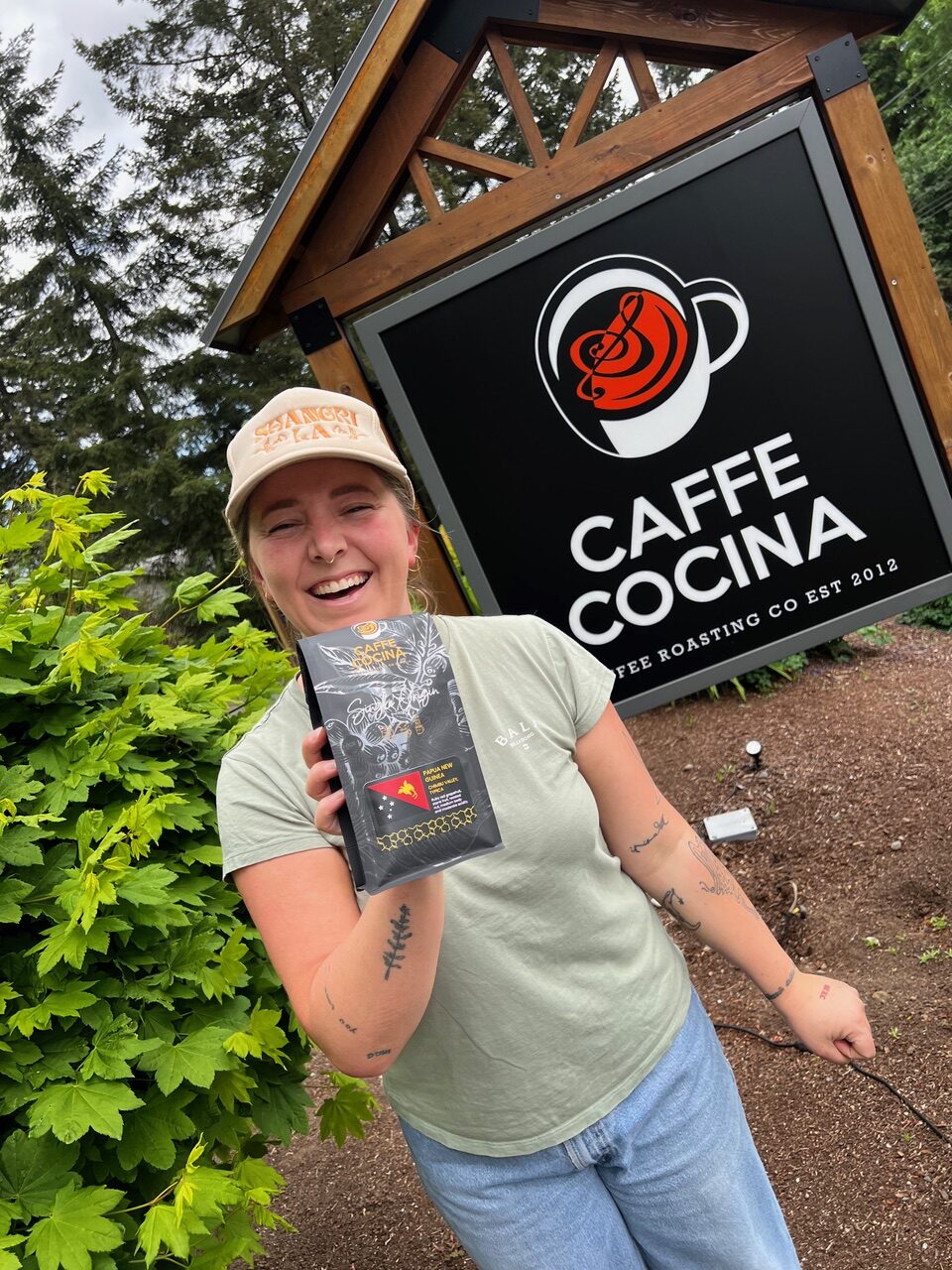
Purchase this weeks featured Single Origin and receive half off any regular blend.
This Saturday May 9th come through and check out our Papua New Guinea, Chimbua Valley TYPICA!
Ruby red grapefruit, stone fruits, pairs excellent with milk, medium body and moderate acidity. Medium dark roast. TASTE THE FLAVOR. SEE YOU SATURDAY!
Take a deeper dive
Origin Notes
Papua New Guinea coffee is known for a smooth, sweet, and bright profile, with flavor notes of dark berry. chocolate, caramel, and citrus acidity.
This coffee reminds us of:
Ruby Red Grapefruit, Stone Fruits, Syrupy Finish, Medium Body, Moderate Acidity
Growing & Processing
Grown in high-altitude, fertile volcanic soil in the Eastern and Western Highlands, PNG coffee is typically wet-processed. This method results in a cleaner cup compared to many other Indonesian coffees.
Key Characteristics
- Flavor Profile: Generally medium-bodied with notes of dark chocolate, brown sugar, caramel, and bright tropical fruit or citrus acidity.
- Roast Level: Best enjoyed as a medium roast to highlight bright, fruity, and floral notes, though it can also hold up to darker roasts.
- Variety: Many plantations originated from Arabica seeds imported from Jamaica’s Blue Mountain region, contributing to a high-quality, sweet bean.
- Production: Approximately 83% of coffee is grown in small, family-owned “coffee gardens,” often with around 20 trees rather than large plantations.
Cultural & Economic Context
Today, coffee is the backbone of the rural economy in Papua New Guinea and the primary source of income for more than 40% of the population. Roughly 95% of producers are smallholders, growing coffee alongside subsistence crops such as bananas, papaya, and legumes.
Papua New Guinea’s diversity is remarkable. Villages in the fertile, coffee-growing highlands range from a few dozen people to tens of thousands. With over 800 languages spoken, many communities were historically isolated from one another. Ongoing tribal conflict, limited infrastructure, outdated machinery, and inconsistent processing methods make sourcing and exporting high-quality lots challenging.
Global Presence
Papua New Guinea produces about 1% of the world’s Arabica coffee. Cup profiles vary by grade and region but generally feature flavors of chocolate, tropical fruit, and citrus.